


Are you looking for a knee specialist in Vienna for a knee replacement?
When is a knee replacement necessary?
Knee osteoarthritis (gonarthrosis) is the most common cause necessitating an artificial knee joint. Hips and knees are most frequently affected by wear and tear.
You may also require a prosthesis after a severe knee injury or other painful conditions that limit your daily activities. The primary goal is always the fastest possible recovery and a permanently pain-free state.
How is an artificial knee joint implanted?
MyKnee – the revolution in knee arthroplasty
I perform the surgery using the MyKnee System. Before the procedure, a CT scan (computed tomography) of the leg is performed.
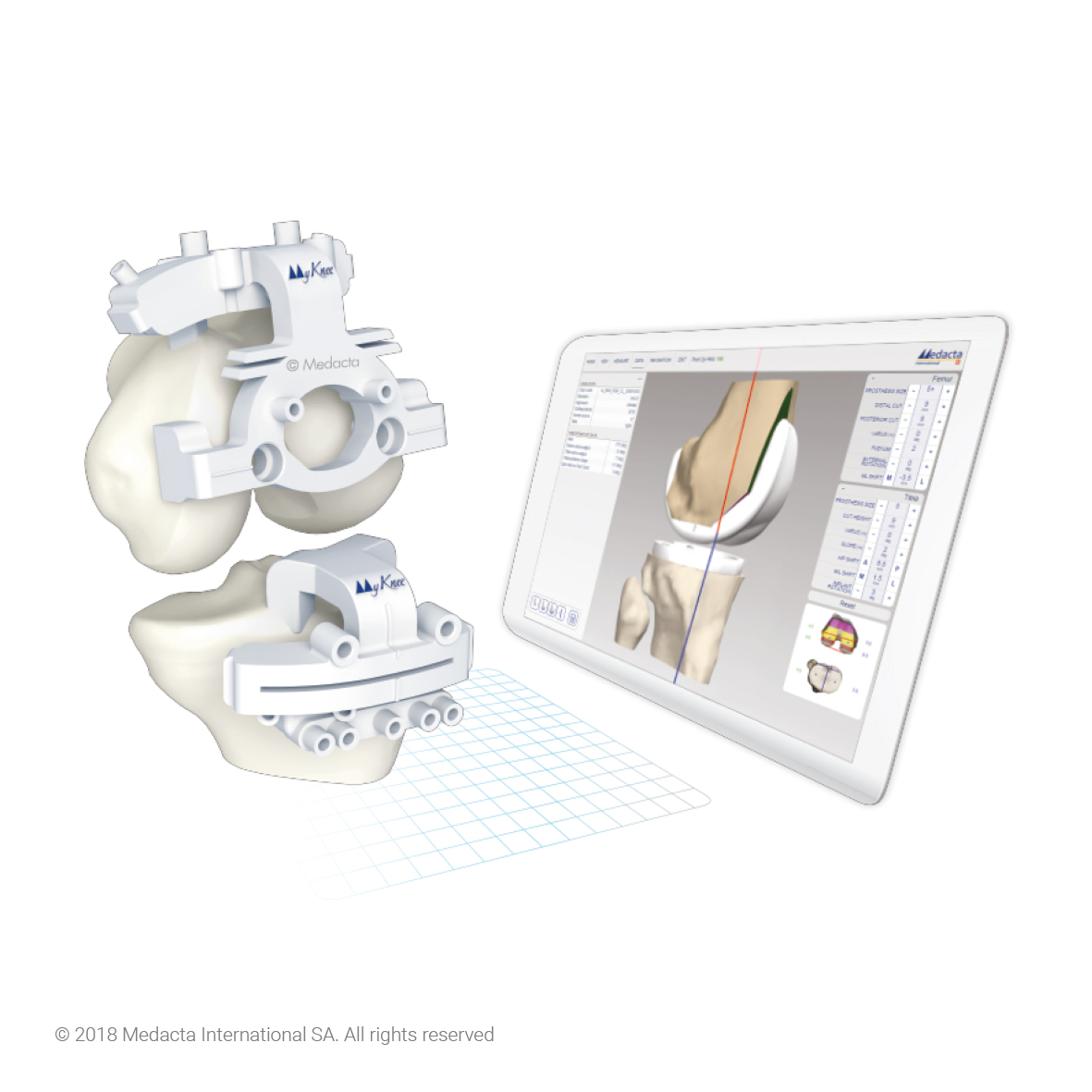
Computed tomography depicts the anatomy of the hip, knee, and ankle joint. With the help of specialized software, the exact size of the implants and their position are then calculated. The three-dimensional image of your knee joint is used to create a customized template. During the operation, the time for intraoperative planning and placement of the prosthesis is thus saved, which can result in approximately 20 minutes of saved operating time in comparison.
What are the advantages of the MyKnee Knee Replacement technique?
- Precision and accuracy in knee replacement placement
- Shorter operating time
- Immediate weight-bearing of the knee joint after surgery
- Faster recovery
- Less postoperative pain
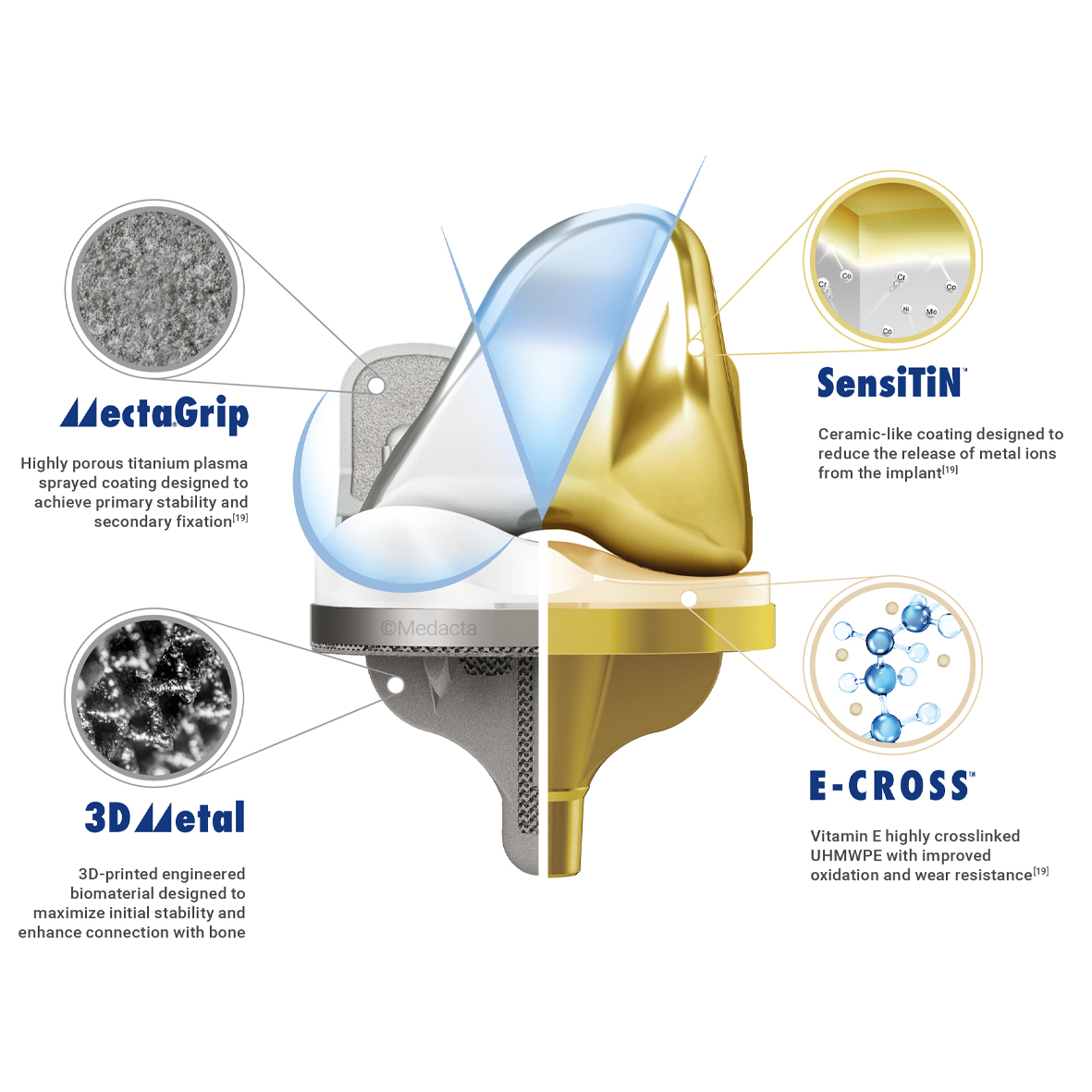
Hospital stay after a MyKnee knee replacement surgery is 4-7 days, depending on the clinical course. In case of a nickel allergy, a full ceramic implant is used to completely rule out an allergic reaction to nickel.
Partial Knee Replacement
In a partial knee replacement, a so-called unicompartmental knee replacement, only one half of the knee joint is fitted with an artificial joint. Younger patients, in particular, benefit from this technique. The most significant advantage of partial knee replacement is quicker recovery.
Surgical experience is particularly important for unicompartmental knee replacements. I have many years of experience in implanting knee joints.
New at My Practice: Cementless Knee Replacement Implants by Medacta
For selected patients, I now offer a new generation of knee replacement implants that can be fixed without the use of bone cement. The implant’s specially designed porous surface allows the bone to grow directly into the implant, creating a stable biological fixation. This approach reduces the amount of foreign material introduced into the joint and shortens the duration of surgery. For active patients with good bone quality, cementless knee replacement may be an excellent treatment option.
Advantages of Cementless Fixation
- No use of bone cement
- Less foreign material in the knee joint
- No potential exposure to bone cement in patients with sensitivity or intolerance
- Shorter operating time
- Biological bone ingrowth for long-term implant fixation
- Particularly suitable for active patients with good bone quality
As there is no need to prepare, apply, and allow the bone cement to cure, the surgical procedure can be shortened by approximately 15 minutes.
Whether a cementless knee replacement is the most appropriate option depends on several factors, including bone quality, age, activity level, and the patient’s individual anatomy. These aspects are carefully evaluated during a personal consultation.
New Implant Design: SPHERICA
The implants I use have been further refined. One of the key innovations is the redesigned patellar articulation. An increased acceptance angle improves the natural tracking of the kneecap after surgery (improved patellar tracking). The result is reduced anterior knee pain and a more physiological, high-quality functional outcome.
Minimally Invasive Surgical Technique: Subvastus Approach
Whenever appropriate, I perform knee replacement surgery using the subvastus approach. This muscle-sparing technique preserves the quadriceps muscle by avoiding detachment of the extensor mechanism. Patients may benefit from less postoperative pain, faster recovery of muscle function, and earlier rehabilitation.

Dr. Mark Schurz – Knee Specialist Vienna
CONTACT